
A problem of scale
Seawater is teeming with life: there are between 10 and 100 billion organisms—viruses, bacteria, protists, and animals—in every litre of seawater on a global scale. This life is called “plankton” or the “oceanic microbiome.” These invisible microorganisms play a crucial role in creating habitable conditions on Earth, having contributed to the oxygenation of the atmosphere and influenced our genome. They have been floating in the oceans for four billion years and regulate the climate as well as the physiology of the Earth’s system.
Learning about oceanic plankton biodiversity at remote locations and the factors that affect their distribution is the focus of the Bougainville Mission – a new French initiative that embeds student-led oceanographic sampling aboard French Navy vessels, the D’Entrecasteaux, Bougainville, Champlain, Osiris, and Astrolabe.
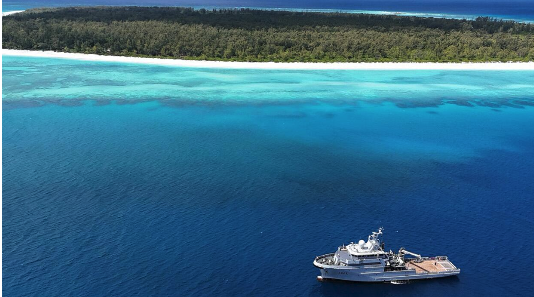
Sampling along naval routes
The Bougainville Mission embeds between four and six master’s students from the Sorbonne as Volunteer Officer Aspirants Biodiversity (VOABio) within the French Navy. Under the scientific direction of the mission (Sorbonne University, CNRS, University of Maine), these students collect planktonic microbiome samples from as many as 100 sites per vessel over the course of a year.
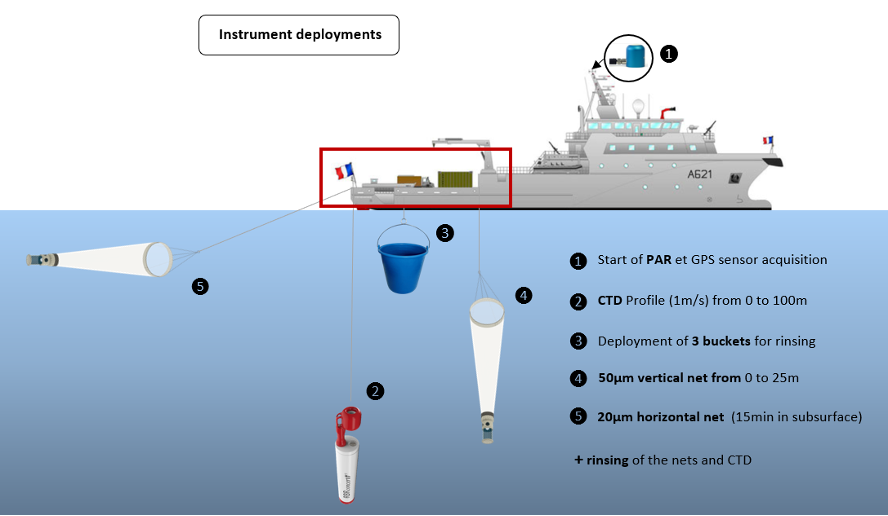
To help contextualise these samples, Bougainville Mission researchers profile the water column at each sample site using RBRconcerto³ CTDs. The choice of the RBRconcerto³ CTD reflects a careful balance of performance and usability. Its long-term measurement stability (e.g., conductivity ±0.010 mS/cm per year, temperature ±0.002°C per year, and depth ±0.05% full scale per year) supports consistent observations across extended deployments. However, the instruments are also compact and versatile, making them well-suited to frequent deployments across variable conditions. Its design ensures that even first-time users can acquire reliable, high-resolution profiles of the water column, without a steep learning curve.
Sampling along naval routes gives these student researchers access to remote areas not practical for traditional research vessels. Once in place, the vessel holds position while researchers deploy buckets and nets. Three samples are taken at each location, a process that can take as little as half an hour and involves minimal environmental disturbance. Once the samples and CTD probe have returned safely onboard, the planktonic microbiome samples are filtered, imaged, and analysed.
A classroom without walls
For students, one of the defining features of the Bougainville Mission is access to research-grade instrumentation from day one, opening the door from the classroom to the wider world.
Yet, what makes the Bougainville Mission particularly important is that it goes beyond training. Between 2026 and 2030, the Bougainville mission plans to collect 2500 planktonic biomass samples for DNA analysis, process approximately 2 million plankton images, and complete profiles at 1200 sites. Data gathered during these deployments contributes to a growing understanding of ocean structure and variability in some of the world’s least-sampled marine regions.
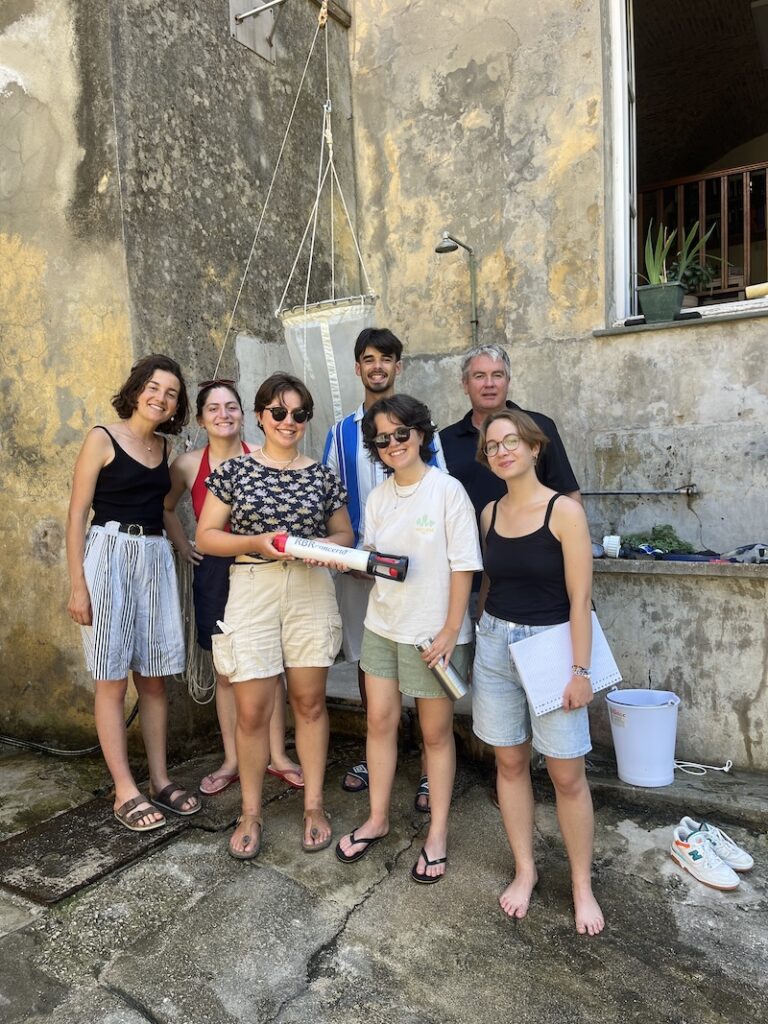
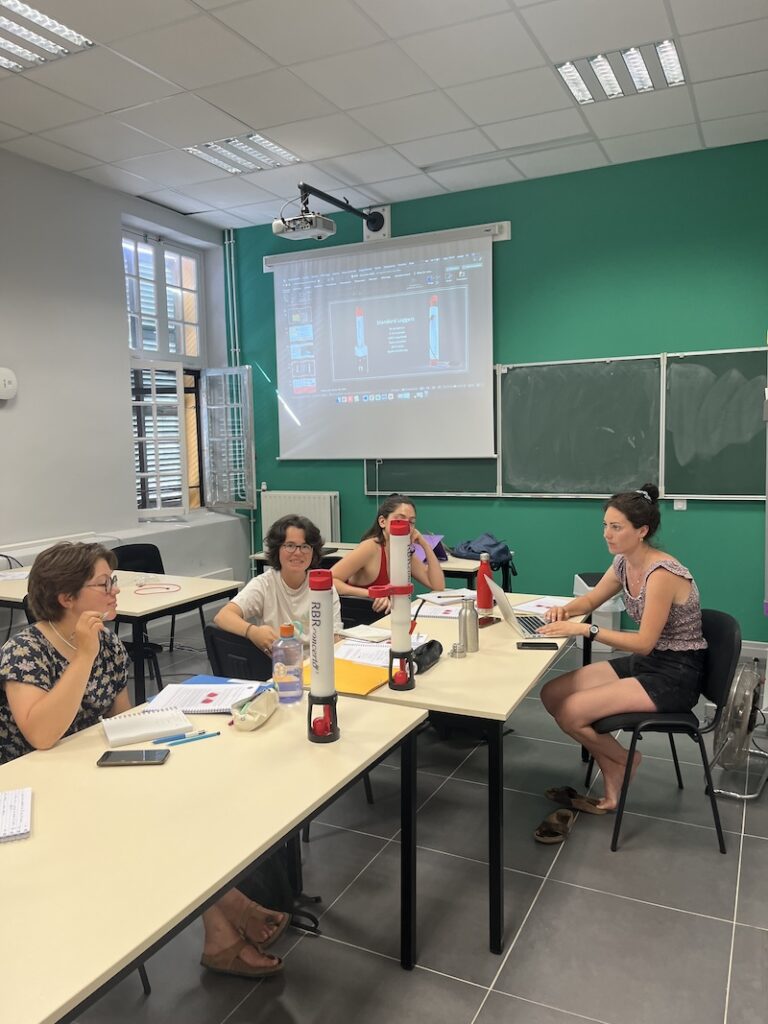
Rather than attempting to overcome the limits of traditional oceanographic campaigns, the Bougainville Mission rethinks how to work with existing operations. By pairing adaptable sensor technology with distributed, ship-based sampling and student-led fieldwork, it points toward a more scalable model of data collection – one capable of supporting the global observations needed to better understand plankton dynamics and, ultimately, the future of our biosphere.
Learn more
Bougainville Mission
Bougainville Mission ambitions for 2030
RBRconcerto³ CTDs