

RBR is pleased to introduce the RBRsolo⁴ D barometer, an atmospheric pressure variant of our trusted RBRsolo⁴ D pressure logger. It shares the same compact form factor, battery options, and Ruskin workflow as the rest of the RBRsolo⁴ D family, but it measures one thing only: atmospheric pressure. Deployed at the surface alongside a submerged pressure logger, it gives users everything they need to correct tide and water level data as a result of changes in the weather. And Ruskin has been updated to make the set up, download, and processing a breeze.
Why atmospheric correction matters
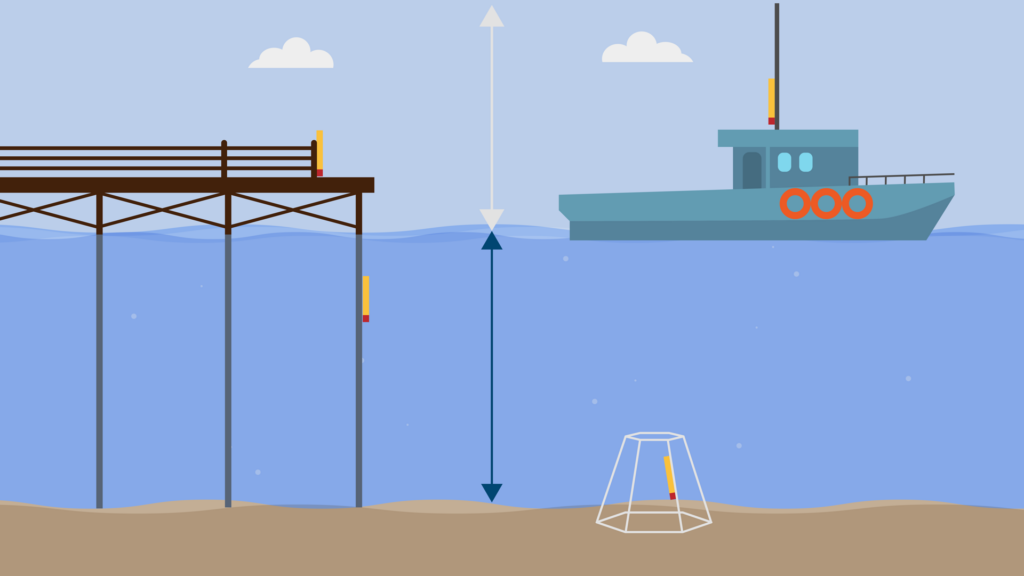
Any pressure logger deployed underwater measures two things at once: the weight of the water above it, plus the weight of the atmosphere pressing down on the surface of the water. Atmospheric pressure shifts with the weather, a passing storm, or a slow-moving system will affect a reading enough to distort the sea pressure and hence depth data, unless that shift is removed.
The RBRsolo⁴ D barometer makes this straightforward: deploy it above the water, alongside a submerged instrument, and let it record surface pressure for the length of the deployment. Once both instruments are recovered, Ruskin does the rest, and the resulting dataset can be used to correct any water level time series, not only RBR’s own.
How it works
-
Set up the RBRsolo⁴ D barometer and your RBR deployable instruments using Ruskin, time-synching them together.
-
Deploy the RBRsolo⁴ D barometer at the surface, on a nearby vessel, buoy, or structure, while a submerged standard RBRsolo⁴ D, or any other RBR pressure logger, records underwater as usual.
-
Both instruments record independently for the full deployment.
-
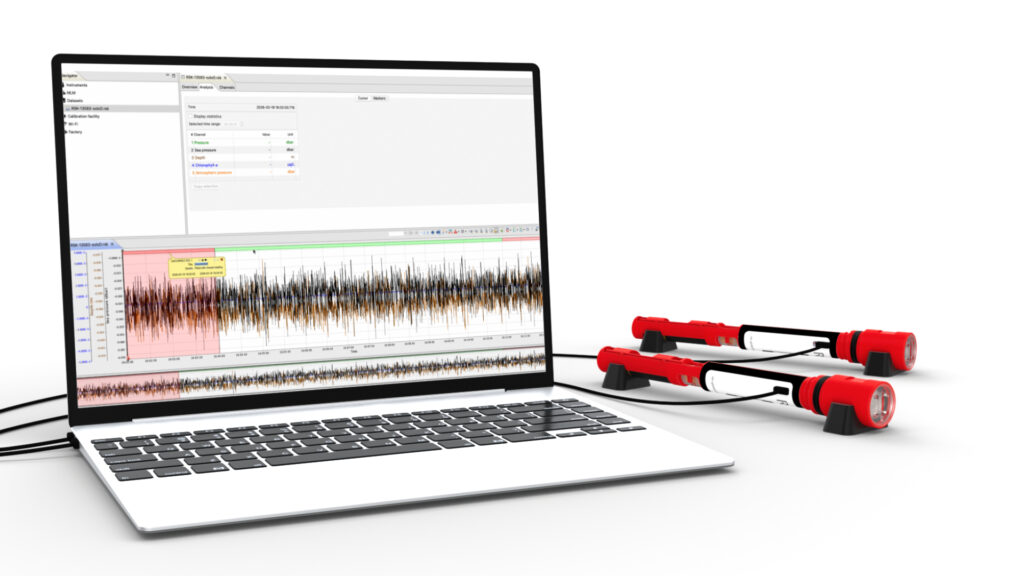
After recovery, download the datasets in Ruskin as per usual – quick and easy.
-
Open the underwater dataset in Ruskin and go to File > Toolbox > Apply atmospheric correction.
-
Select the barometric dataset (.rsk or .csv); Ruskin auto-detects the pressure unit, subtracts the recorded atmospheric pressure from the underwater readings, and adds an Atmospheric pressure channel to the dataset.
-
If the two time records do not line up perfectly, Ruskin extends the correction using the nearest available barometric value at either end, and linearly interpolates across any gaps.
Same platform, new application
The RBRsolo⁴ D barometer shares its form factor, battery options, and download workflow with the rest of the RBRsolo⁴ D family:
-
Compact and lightweight design
-
Any AA battery chemistry
-
USB-C download
-
“Effectively infinite” memory*
*Not really, but we stopped counting at billions of samples.
Barometric variant specifications
|
Parameter |
Value |
|---|---|
|
Range |
700-1200hPa (7-12dbar absolute) |
|
Initial accuracy |
±0.5hPa (0.005dbar) |
|
Resolution |
<0.01hPa (0.0001dbar) |
|
Typical stability |
±0.5hPa/year (0.005dbar/year) |
|
Time constant |
<10ms |
|
Operating temperature |
-10 to +80ºC |
For more details on the new RBR barometer, contact info@rbr-global.com or learn more here.