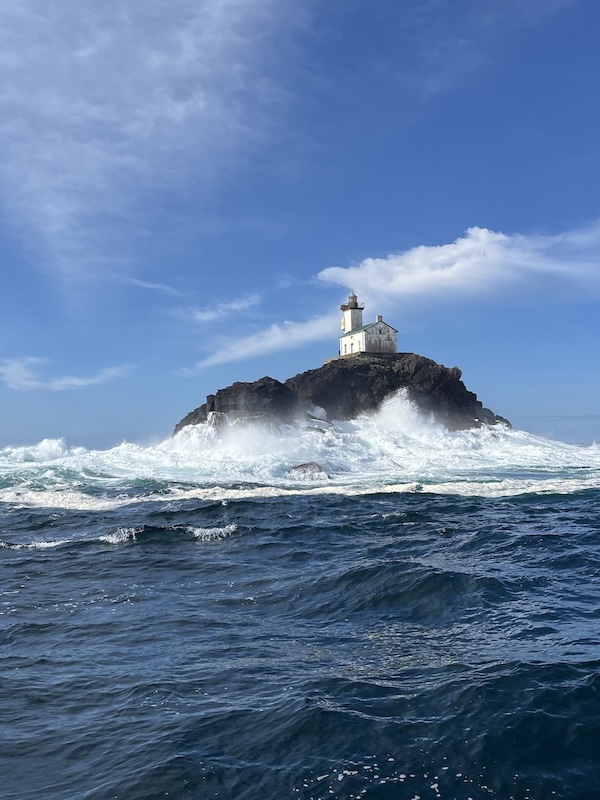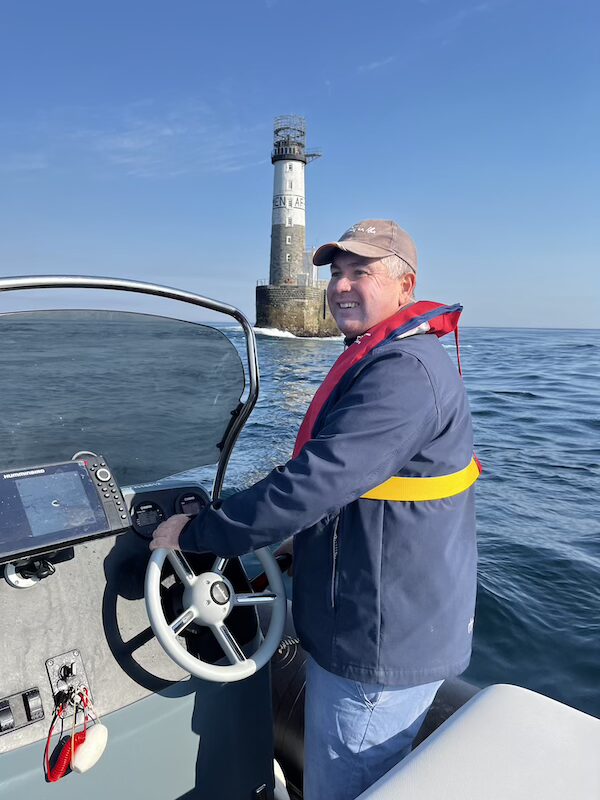
Didier Clec’h has been in love with the ocean since he was eight years old. Today, as RBR’s regional leader in Europe, that passion still drives him — and it’s the kind of feeling you’ll find throughout the company. At RBR, the blue planet isn’t just what we build for. It’s what we are drawn to.
Didier has spent more than 30 years at sea. He built his first relationship with ocean science as a child, working on boats from age eight. Today, he runs RBR Europe from France — and his passion for the ocean hasn’t dimmed a bit.
“The blue planet is so big,” he says. “There is a very large range of application: temperature, pressure, chlorophyll, fDOM, turbidity.”
Didier’s days are full: customer conversations, OEM partnerships, team management, and the ongoing work of growing RBR’s presence on the continent. He joined RBR in December 2019 — just months before COVID locked the world down — but had already worked alongside RBR as our French agent for about five years before that.
“I found the instruments were very interesting,” he recalls. “People want to find a very good instrument, with very high resolution, high accuracy, and that are very easy to use. And that is something very interesting at RBR.”
A changing industry
That simplicity matters more than ever. Didier sees the industry shifting toward autonomous platforms — gliders, AUVs, drones — where instruments need to be low-power, efficient, and built for long deployments. Budget pressures mean research vessels go to sea less often, sometimes only every two or three years. The data from each deployment has to count.
“The cost of deployment is very high compared to the price of the instrument,” he explains. “When considering large research vessels, for 30 days’ deployment at sea for a mission, it’s around €500k to €1 million only for the ship. The instrumentation needs to be reliable.”
That reliability — combined with RBR’s direct, no-intermediary support — has turned more than one sceptical customer into a committed partner. Didier recalls arriving at a lab in France where RBR wasn’t well regarded. Over time, it became one of his strongest relationships in the region.
“We know there can always be some issues with instruments because they are deployed at sea,” he says. “But to be able to support if that happens, and be close to the customer — to me, that is very important.”
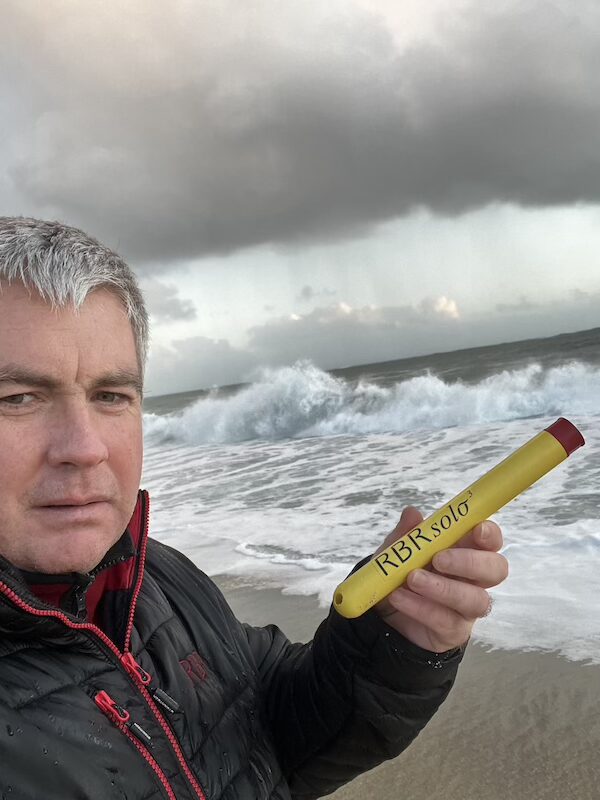
What’s ahead
Didier is equally enthusiastic about what’s on the horizon. The European Parliament’s OceanEye programme, RBR’s role in the Argo float network, and the emerging SMART cable project — connecting oceanography with geophysics and real-time data at scale — represent the kind of frontier science he finds irresistible.
“We are working more and more to have more data to help grow our knowledge of ocean science, climate change, temperature, pressure,” he says. “It’s science for tomorrow.”
His favourite instrument? The RBRconcerto³ CTD: compact, fast-sampling, and straightforward to deploy. “You can have it in your backpack all of the time.” But he’s just as eager to talk about the RBRquartz3 BPR|zero — an instrument he sees as barely past the start of its potential, with applications spanning volcanic monitoring, Arctic and Antarctic research, and the future of ocean observation.
“I think we are just at the beginning of realising the full potential of this instrument,” he says, and “expanding its use in both numerous and varied applications”.
That curiosity — the drive to keep learning alongside the scientists RBR serves — is what keeps Didier moving. More than 30 years on, he’s still genuinely in love with the work.
“I love the blue planet,” he laughs. “I’ve met great people in science. Very, very interesting people.”